
Hair transplants for women are booming. Their success rate is complicated
A CNN investigation follows three women across the UK, Germany, and Turkiye whose desperate search for thicker hair highlights the hope — and heartbreak — behind the surge in female hair transplant demand.

It started slowly, with handfuls of hair circling the plug hole and strands left on her pillow. British bodybuilder Tracy Kiss had always described her hair as massive and healthy, yet by 25 — after the birth of her two children — she could suddenly see her scalp whenever she washed it.
Morning routines became less about self-expression and more about disguise. Kiss scraped her hair tight to hide thinning temples, cycled through wigs and extensions, and still felt defeated every time she looked at photos. Blood tests revealed vitamin deficiencies, and specialist shampoos, supplements, PRP injections, and nutrition plans offered only short-term relief.
“It makes you feel so demoralised,” she said. “As a woman, your hair is your crowning glory. Take it away and you almost lose your identity.”

According to Harvard health experts, at least one third of women experience some form of hair loss. Female pattern hair loss — or androgenetic alopecia — remains the most common diagnosis, affecting an estimated 40% of women in the United States by age 50.
CNN interviewed three women who travelled for surgery despite being told the treatment was historically “only for men.” Industry figures show female patients now account for more than 16% of global hair transplant demand, up sharply since 2021.
Kiss first enquired about a transplant in 2011 after researching options for her boyfriend, but multiple surgeons rejected her purely because of her gender. “It wasn’t available at all,” she recalled. Eleven years, $3,400, and one determined physician later, she finally secured approval.
In 2022 she flew to Turkiye, where 2,500 follicles were implanted across her hairline and temples using FUE, a technique that removes follicular units directly from a donor area of the scalp. The recovery was swift — she was easing off pain medication within 24 hours — but Kiss stresses that every female patient’s result depends on the root cause of their loss.
London-based transplant surgeon Dr. Greg Williams treats women experiencing traction alopecia from tight hairstyles, transgender women seeking a lower and more feminine hairline, and cis women fighting genetic thinning. Yet he warns that hormone shifts, pregnancy, post-lactation changes, stress, illness, and nutrition can affect women’s hair more unpredictably than men’s.
For women with genetic hair loss, Williams says transplant surgery is often better understood as buying time than as a permanent cure, because the condition can continue to progress if it is not stabilised. He also warns that people experiencing hair loss can be psychologically vulnerable and easy for poor operators to exploit.
Thirty-two-year-old Ayca Bozok from Germany remembers her hair thinning at 15 while she was still in secondary school. Losing hair while forming an identity felt brutal: “You’re just developing as a female,” she said. “You just have your looks. You don’t even have an academic status.”
She was diagnosed with androgenetic alopecia as a teenager, but a traumatic event in her early 20s accelerated the fallout. In panic she took out a student loan to fund PRP injections, supplements, nutrition plans, and camouflage fibers — anything to buy time. Even after regaining roughly 60% density, she still felt trapped by the daily routine.
Bozok admits her eventual transplant decision in 2024 was “super impulsive.” She skipped deep research, sent WhatsApp photos to the first Istanbul clinic that replied, and agreed to around 3,500 follicles for $2,900. Thin donor density meant technicians could implant closer to 2,800 grafts, and she experienced eight days of moderate but manageable pain.
A year later she is documenting the regrowth on Instagram and TikTok. Some of her videos have reached thousands of views, but she understands that transplanted hair may not last forever. “People in my comments have told me they’ve lost their transplanted hair after two or five years,” she acknowledged. “My state of mind is: I enjoy it as long as I have it.”
For many women with genetic hair loss, the search for a solution can feel like a moving target. Awareness of hair transplantation has grown sharply, and ISHRS figures cited by CNN show that procedures in Europe increased by 240% between 2010 and 2021. Williams worries that some new clinics entering the market may be taking advantage of the desperation linked to female-pattern hair loss.
Samantha Evans, a 40-year-old from Northampton, England, represents the other side of the boom. She had noticed thinning and bald patches for a decade but avoided dealing with them because of embarrassment. In 2019, a trichologist suggested she might have female-pattern hair loss; PRP injections in 2022 did not work, and a nurse later referred her to a London transplant clinic.
Her surgeon knew she had both androgenetic alopecia and polycystic ovary syndrome, conditions that can contribute to unexpected hair loss. Evans paid roughly $8,500 for a transplant that lasted more than 10 hours, yet the anaesthetic never fully numbed her scalp. “I was just sobbing the whole time,” she recalled.
The first two weeks of recovery were isolating. Evans avoided leaving the house because the wounds were so visible and lost sleep following the strict post-op rules designed to protect the grafts. Her surgeon warned that her thin density might require two or three procedures, but she trusted that only high-quality grafts would be implanted.
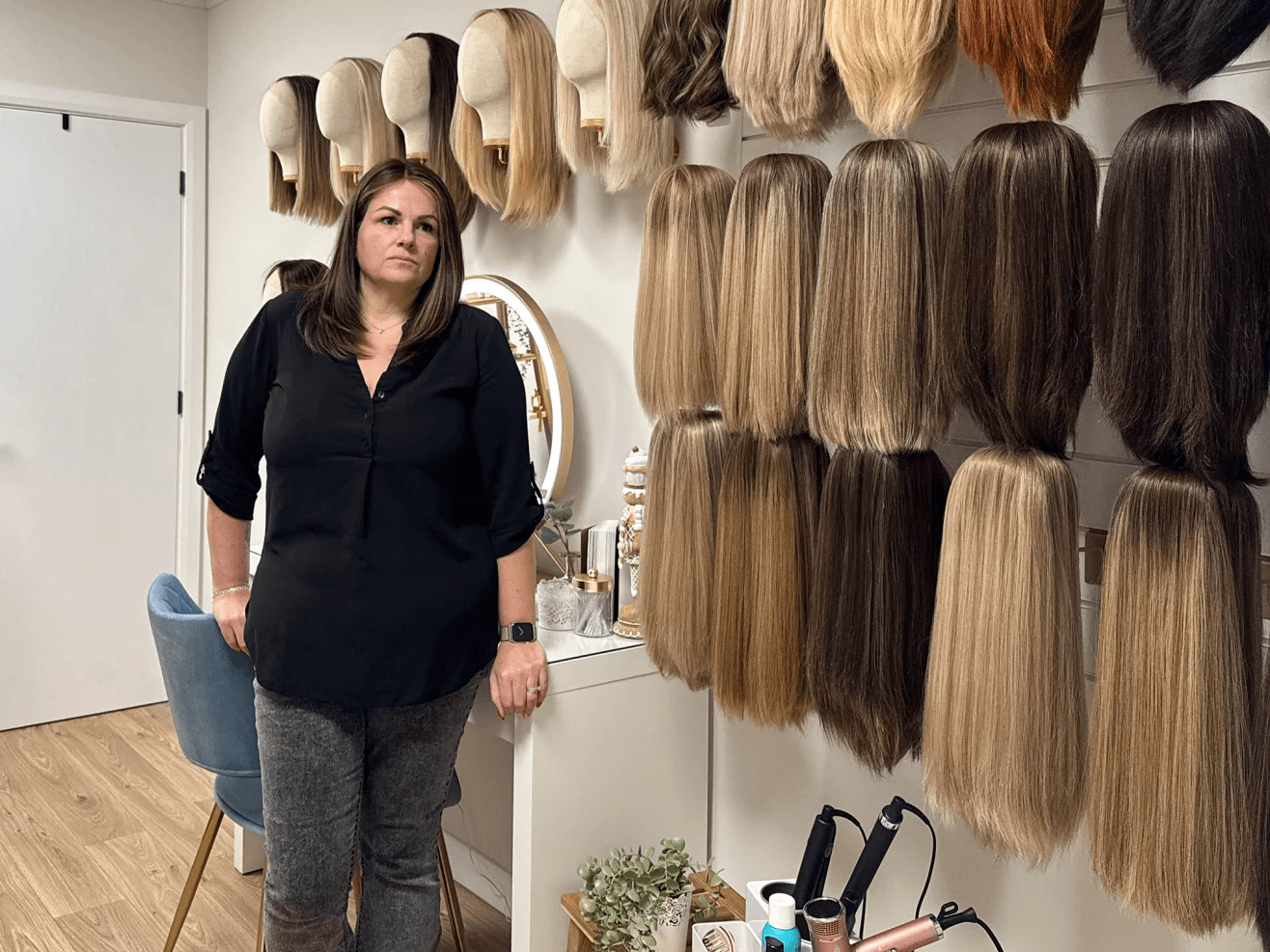
Within months she began shedding even more hair. “If anything, my hair is worse than it was beforehand,” she said through tears. She had assumed the transplant would reinforce her hairline enough to wear it in a ponytail again. Now she relies on wigs daily and has launched her own wig brand, Loss 2 Lace. “It sounds dramatic to say, but wigs have changed my life.”
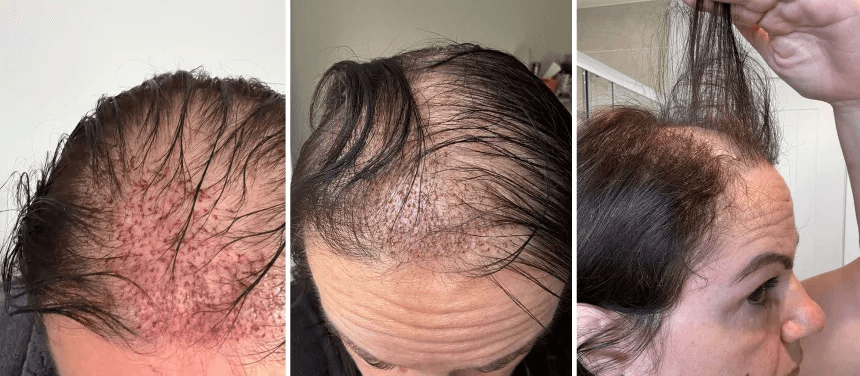
Evans now believes she was poorly assessed before the operation and that no healthy donor area existed to harvest from in the first place. Although she says the surgeon was clear that failure was possible, she had been reassured that the procedure would strengthen her hairline enough for a ponytail. “I look back now and obviously wish I had done my research,” she said. “I just went with the initial recommendation.”
Williams is concerned that some women are approved for surgery without the underlying cause of their hair loss being properly diagnosed, or even when they are not good surgical candidates. He argues that some patients would be better served by waiting until medication has stabilised their hair loss before undergoing a transplant.
Kiss says regaining hair made her feel as if she had been given another chance, but not every woman is as fortunate. Bozok later discovered that videos from her recovery journey were being used without permission in advertisements for unevidenced hair-loss products, turning a successful result into something more complicated.
For Bozok, Kiss, and Evans, sharing their journey online created an unexpected support system. Kiss’ YouTube videos attract thousands of viewers, Bozok’s DMs are full of women seeking reassurance, and even men ask how to support the women in their lives experiencing hair loss. Evans calls the network “empowering” despite her failed outcome.
Dr. Williams urges anyone pursuing surgery to secure a clear diagnosis first, speak directly with the operating surgeon before paying, and avoid clinics that keep the surgeon anonymous. He encourages patients to verify links to reputable bodies like the International Society of Hair Restoration Surgery (ISHRS), which provides education, clinical guidance, and a code of conduct.
He also campaigns for better regulation. “Hair transplant surgery sits in a gray area between surgical and non-surgical,” he said. “In many cases it’s done in private clinics behind closed doors. Nobody’s inspecting.”
For the women featured, the procedure is rarely a simple fix. It can offer confidence, provide a temporary bridge while medications stabilise hormones, or — when poorly assessed — leave them in worse condition than before. The booming demand proves one thing, they say: women want honest assessments, qualified surgeons, and full transparency about the limits of transplantation.